
The Good Gausthaus: 1477 Reichhalter in Lana, South Tyrol
In the South Tyrolean town of Lana, a long, layered building has been re-established a modern place to gather. 1477 Reichhalter traces its origins back to the late 15th century, when it began as a mill. Over the centuries it moved between uses—a coffee house, a butcher’s shop with an inn—before its most recent reinvention in 2018 as a small hotel with eight rooms, a cafe, and a restaurant.
Rather than staging a version of Alpine tradition, the project returns to the idea of the Gausthaus as a social anchor—informal, civic, and accessible. The ground floor was expanded to include two Gaststuben (living spaces) and an espresso bar that opens directly to the street. The renovation framework was overseen by architect Zeno Bampi, with interiors by Christina Biasi von Berg, co-founder of local firm Biquadra. Their collaboration is considered and precise. The language is Alpine without cliché: finishes are muted and furniture draws from a wide arc of European history, from 19th-century to mid-20th-century antiques and vintage finds. Nothing feels imported for effect.
The result is a modern mountain hotel that feels lived-in from the outset—a return to the glory of a local inn as shared interior, open to local and traveller alike, and informed by tradition.
Photography courtesy of 1477 Reichhalter.
 Above: 1477 Reichhalter is owned by brothers Klaus and Moritz Dissertori, who grew up in Lana, where their parents operated a family hotel. Their focus is on revitalizing historic properties rather than building anew.
 Above: The exteriors were modernized with pine cladding and a new palette integrating a pale to mid green on shutters and doors.
 Above: The eight guest rooms are pared back but warm, with a sense of enclosure fitting for a mountain guesthouse. Rooms are named after former owners and traces of historic trades—Schönmüller, Erasmus, Balthasar, Helmsdorf, Mözpanckh, Mihl, Brodtbank, and Stadele—signaling continuity over theme.
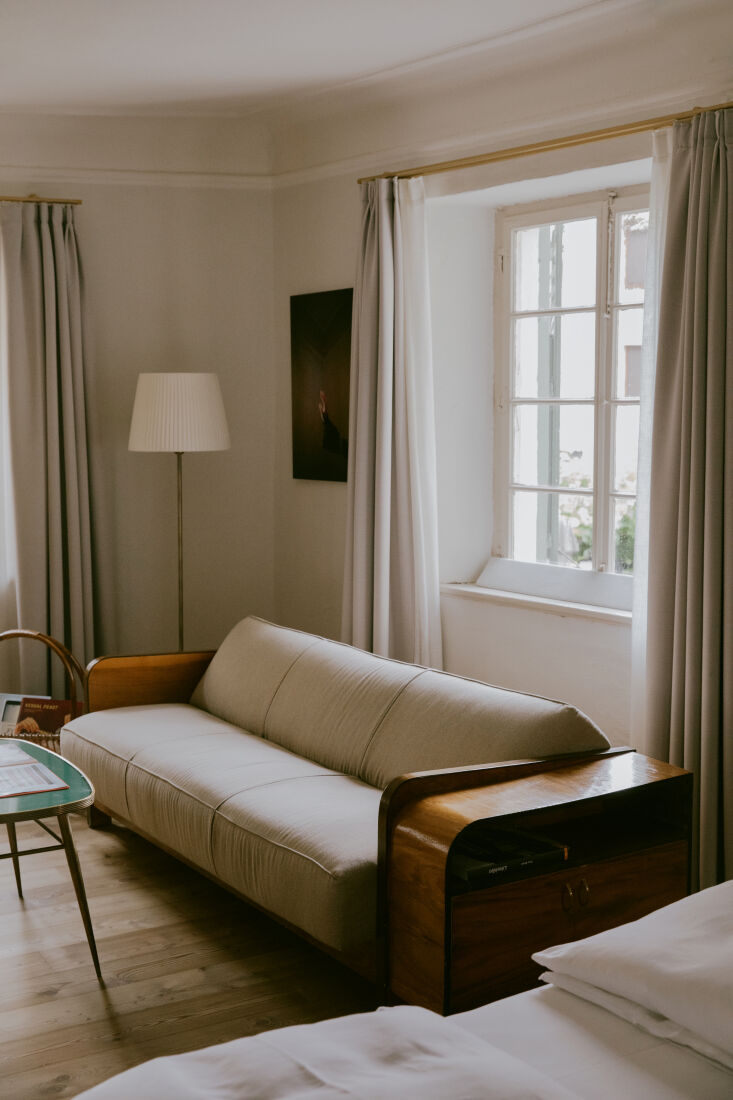 Above: An example of vintage pieces incorporated into each room, then updated with upholstery and finishes. Designer Christina Biasi von Berg specializes in combining “new designer pieces with antique, recycled furniture and with our original made-to-measure fittings, furniture, light fixtures, and textiles.”
 Above: A small reading/writing area is defined with a vintage floor lamp and chairs.
 Above: Integrating ensuite bathrooms into the original floor plan was no easy feat, given the layout of traditional guesthouses where rooms were supplied with one central bath per floor. Here, the architect integrated a half wall for bath and washing spaces.
 Above: A antique daybed pairs with characterful velvet cushions. Small windows were fitted with interior shutters that slide close.
 Above: A tousled bed and simple bedside accompaniment.
 Above: The restaurant kitchen works with local suppliers: bread arrives daily from a South Tyrolean baker and salami is made in-house.
 Above: Lighting is supplied by simple enamel and cut glass pendants.
 Above: Newspaper holders hang on corner coat racks.
 Above: A Gastube is the German word for the shared parlor or communal living rooms of guesthouses and inns. Here, that historic essence is captured with original wood, pub-like benches and chairs, and low-hanging pendant lights.
 Above: Gatherings move outside in warmer months under a natural canopy and bistro seating.
 Above: The coffee shop of 1477 Reichhalter supplies locals and guests alike with morning coffee and place for gathering.
 Above: The majestic view of Lana in South Tyrol.
For more favorite hotels in the region see our posts:
Categories