
Trend Alert: Perforated Brick Takes Center Stage
The hole truth: until recently, perforated bricks were relegated to behind-the-scenes roles, such as for constructing load-bearing walls and parking lot barriers. Lighter than traditional bricks—so easier to transport and less impactful on foundations—they also offer better mortar adhesion and superior insulation against heat and cold. Plus they’re affordable and their circles create pleasing patterns.
Which explains why these humble, age-old building blocks are now being put to inventive uses as both structural and decorative elements. Designers have also come up with their own more sophisticated riffs on the standard cored block. Here are some notable examples and ways to use them.
Traditional Perforated Brick
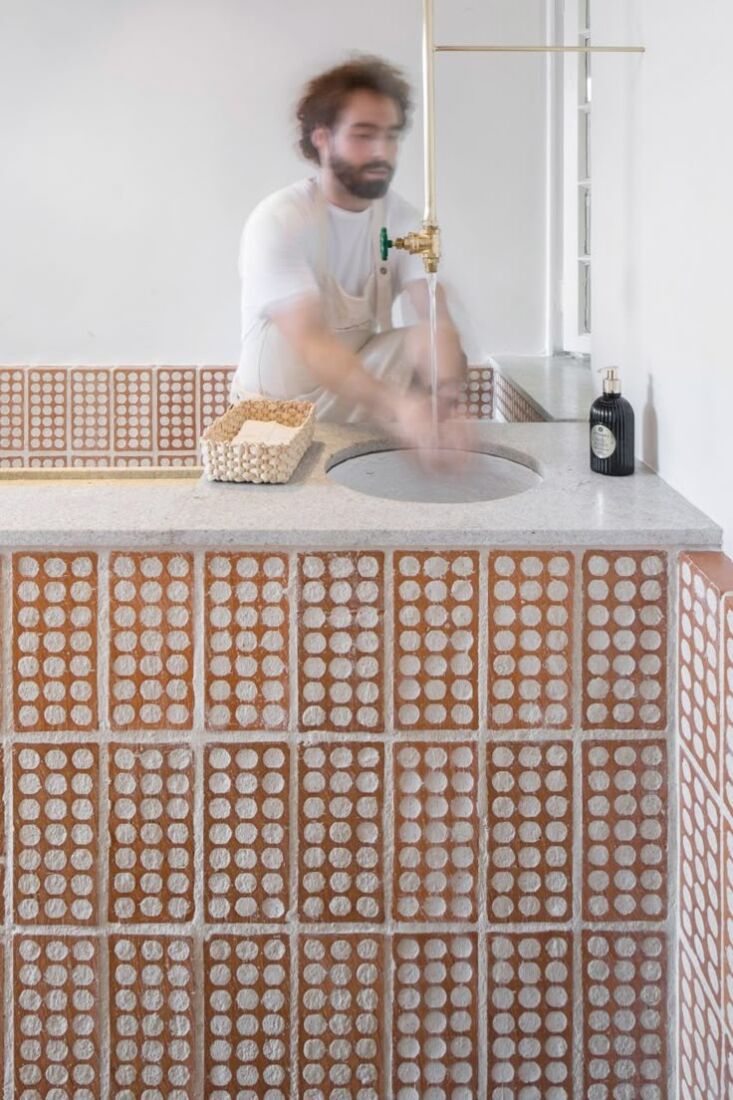 Above: Dezembro Arquitetos of São Paulo designed Mintchi Croissant, a bakery in their neighborhood, Pinheiros, to “feel like the inside of a croissant.” Photograph by Carolina Lacaz.
 Above: Mintchi Croissant occupies a former 10-by-16-foot garage and was created on a tight budget. The counter, bench, wainscot, and floor put perforated brick to good use, and the ceiling is lined with cardboard tubing. Photograph by Carolina Lacaz
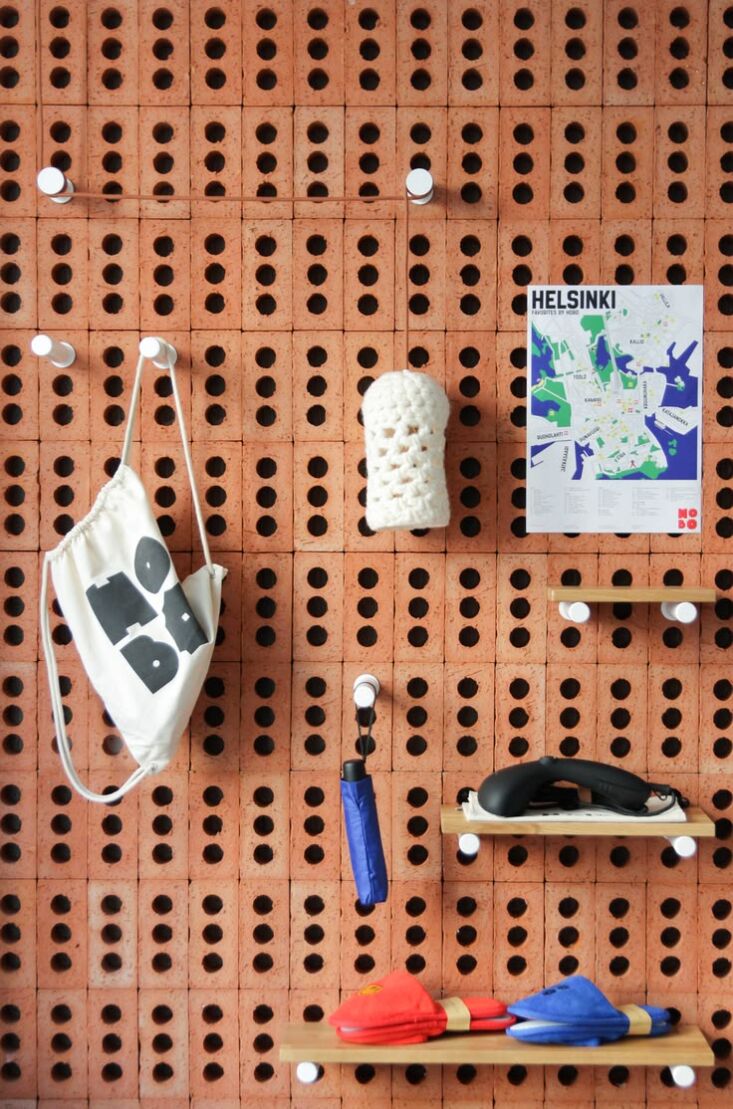 Above: At Hobo, a hotel in the center of Helsinki designed by Studio Aisslinger of Berlin, wooden dowels turn a brick wall into a pegboard offering instant storage.
 Above: Ted’A Arquitectes of Mallorca, Spain, employed pattern-meets-pattern brickwork at Moll Petit, a seaside holiday rental complex in Can Picafort. Photograph by Luis Díaz Díaz.
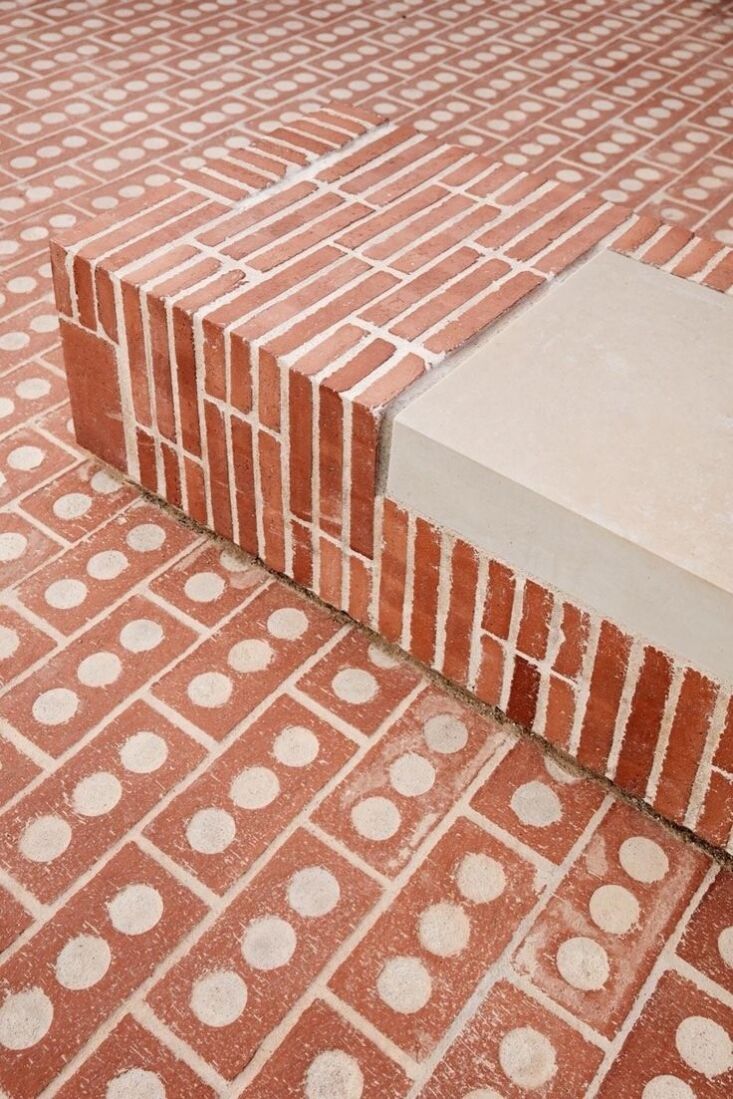 Above: Perforated brick dots the Boca de la Mina promenade, designed by Spanish architecture firm Batlleiroig, in the Catalonian city of Reus.
Refined Versions of Perforated Brick
 Above: Ronan and Erwan Bouroullec designed Italian ceramic company Mutina’s standout Bloc collection, which it describes as “terracotta brick produced with the artisanship extrusion process, a three-dimensional element conceived to build architectural and decorative structures.”
The bricks come in natural terracotta and four glaze colors, available in both matte and glossy. The glazed bricks are also available with contrasting colored inserts.
 Above: Mutina’s Blocs work well as partitions. They available in the US from a number of tile dealers, such as Stone Source and Tile.Expert.
 Above: Just add a desktop (or tabletop): Mutina Bloc in natural.
 Above: In the Rousseau apartment in Paris designed by BeauJour Studio, Mutina Bloc was used to create a bathroom peg wall. Photograph by Mathias Paltrie.
 Above: Clay, a tile company in San Miguel de Allende, Mexico makes a variety of breeze blocks—bricks that allow ventilation—including the terracotta Breeze Block Pozos used in this living room. Also note their square Breeze Block Campo. They’re all made in Mexico in an entirely solar-powered factory.
 Above: Spanish ceramic company Nadis Design’s Matilda Collection is the work of industrial designer Inma Bermudez. It comes in two “formats”—with 2 cutouts or 16 (both shown here)—and in a natural or glossy black finish.
For a while now we’ve been noting the rise of circles in design: see, for instance:
Categories
Recent Posts


